
Key Takeaways
- Tracking your content marketing KPIs helps you measure the impact of your content strategy across awareness, engagement, conversions, retention, and SEO visibility.
- The best KPIs cover traffic, impressions, engagement, conversion actions, returning users, backlinks, and keyword growth.
- A solid KPI framework connects your goals with specific metrics at every funnel stage: awareness → engagement → conversion → loyalty.
- Tools like ViewMetrics, GA4, Search Console, Semrush, and HubSpot make tracking easier by consolidating data in one place.
If you want your content strategy to perform better, you need to measure more than traffic or likes. That’s where content marketing KPIs come in. They show you what’s actually driving growth, which content pieces move people through the funnel, and what you should refine next.
In this guide, you’ll learn the best KPIs to track, how to choose them, and the tools that make reporting easier.
What are Content Marketing KPIs?
Content marketing KPIs are measurable indicators that show how well your content is performing. They help you track progress against your goals, whether that’s increasing website traffic, boosting engagement, generating leads, or improving SEO performance. These metrics pull data from traffic analytics, social platforms, email tools, and SEO dashboards to help you understand the real impact of your content.
Why is Measuring KPIs Crucial for Successful Content Marketing?
Tracking content marketing KPIs gives you clarity about how your content is performing and whether it supports your marketing objectives. Instead of relying on assumptions, KPIs offer a steady stream of evidence that helps you steer your strategy in the right direction:
-
Build a Clear Understanding of Audience Behavior
KPIs help you uncover how people actually engage with your content. From time spent on a page to the topics that spark interest, they give you a deeper look into your audience’s patterns and preferences.
-
Prioritize Content That Drives the Most Value
Not all content performs equally. KPIs highlight the pieces that meaningfully influence discovery, engagement, or conversions, helping you double down on the formats and themes that deliver the strongest results.
-
Strengthen Decision-Making
Instead of relying on assumptions, KPIs give you concrete data to justify strategy shifts, adjust budgets, or refine your editorial focus.
-
Spot Performance Gaps Before They Grow
Regular content KPI tracking allows you to identify drop-offs, stagnation, or audience disengagement early. This helps you fix friction points, update outdated content, or improve distribution before problems escalate.
-
Showcase the Business Impact
KPIs help you demonstrate how your content contributes to wider goals. This makes it easier to secure buy-in from leadership, align cross-functional teams, and justify future investment.
Content Marketing KPIs You Should Track
Below are the essential content marketing KPIs every team should monitor, grouped by performance category.
-
Awareness Metrics
-
Website Traffic (Sessions, Users)
This KPI measures the number of people who visit your website within a specific time frame.
How it’s calculated: Tools count total sessions or unique users who land on your site.
How to track: You can track this in GA4 under Traffic Acquisition.
Why to track: It shows whether your content is successfully attracting new audiences and increasing brand visibility.
-
Impressions & Reach
This metric tracks how often your content appears in search results, social feeds, or video platforms.
How it is calculated: Platforms count each appearance or user reached.
How to track it: Use platform analytics such as Meta Insights, YouTube Studio, or LinkedIn Analytics.
Why to track it: It helps you evaluate how far your content is spreading and whether your distribution strategy is effective.
-
Keyword Rankings & Organic Visibility
This content marketing KPI measures how your content ranks for target keywords across search engines.
How to track it: Use tools like Semrush, Ahrefs, or Google Search Console.
Why to track it: Strong keyword performance shows that your content is building authority and improving your organic search presence.
-
Brand Mentions & Referral Traffic
This awareness metric captures how many external sites reference your brand and how much traffic those mentions generate.
How to track it: Use Ahrefs, BuzzSumo, and GA4 referral reports.
Why to track it: It helps you understand how far your brand influence extends beyond your own channels.
-
-
Engagement Metrics
-
Average Session Duration & Pages per Session
This content marketing KPI measures how long users stay on your website and how many pages they visit.
How to track it: GA4 measures engagement time and page views automatically.
Why to track it: Longer sessions usually indicate that your content is valuable and engaging.
-
Bounce Rate
This metric shows the percentage of visitors who leave your website without any interaction.
How to track it: You can track it in GA4 under Engagement.
Why to track it: A high bounce rate may signal problems with content relevance, page speed, or user experience.
-
Social Media Engagement (Likes, Shares, Comments)
This KPI tracks interactions on social platforms, including reactions, comments, and shares.
How to track it: Use native social media platform analytics for Meta, LinkedIn, X, and TikTok.
Why to track it: Strong engagement indicates that your audience finds your content relatable and worth sharing.
-
Scroll Depth or Time on Page
This KPI for content marketing purposes measures how far users scroll and how long they stay on a specific piece of content.
How to track it: Use GA4 events or heatmap tools like Hotjar.
Why to track it: It helps you understand whether your content layout and writing keep readers interested.
-
Email Open & Click-Through Rates
These KPIs reflect how many people opened your email and clicked through to your content.
How to track it: Email platforms like HubSpot and Mailchimp track opens and clicks automatically.
Why to track it: These metrics show how compelling your subject lines and email content are.
-
-
Conversion Metrics
-
Leads Generated
This KPI counts the number of users who completed lead actions such as demo requests, sign-ups, downloads, or form submissions.
How to track it: Use CRM platforms or GA4 conversion tracking.
Why to track it: It shows the direct impact of content on your pipeline and revenue goals.
-
Conversion Rate
This content marketing KPI is crucial for tracking conversions because it measures the percentage of visitors who complete a desired action.
How it is calculated: (Total conversions ÷ Total visitors) × 100.
Why to track it: It helps you understand whether your content is persuasive and user-friendly.
-
Cost Per Lead (CPL)
This KPI calculates how much it costs to generate one lead through content.
How it is calculated: Total spend ÷ Number of leads acquired.
Why to track it: It is essential for optimizing your content marketing budget.
-
Sales Qualified Leads (SQLs) from Content
This KPI counts leads that are both sales-ready and influenced by your content.
How to track it: Use CRM attribution and lead scoring tools.
Why to track it: It connects content performance with actual revenue potential.
-
-
Retention & Loyalty Metrics
-
Returning Visitors
This KPI measures how many users come back to your website after their first visit.
How to track it: GA4 shows returning user data under Retention.
Why to track it: Repeat visits indicate trust and content relevance.
-
Newsletter Subscriber Growth
This content marketing KPI tracks the increase in email subscribers over time.
How to track it: Use your email marketing platform’s subscriber analytics.
Why to track it: Consistent growth shows strong audience interest and long-term engagement.
-
Customer Retention or Renewal Rates
This metric shows how many customers continue to work with or buy from your business.
How to track it: Use CRM or billing data for retention insights.
Why to track it: High retention reflects strong brand loyalty supported by your content.
-
Content-Driven Upsells or Repeat Purchases
This KPI measures how often customers make additional purchases after consuming your content.
How to track it: Track attribution data within your CRM or analytics tool.
Why to track it: It shows how educational or nurturing content influences revenue.
-
-
SEO & Authority Metrics
-
Organic Keyword Growth
This content marketing KPI tracks the number of keywords your content ranks for over time.
How to track it: Use Semrush or Ahrefs for keyword tracking.
Why to track it: Steady growth indicates stronger search visibility.
-
Backlinks & Referring Domains
This measures the number of external websites linking to your content.
How to track it: Platforms like Ahrefs or Moz monitor backlinks.
Why to track it: Backlinks build domain authority and improve rankings.
-
Domain Authority (DA) or Domain Rating (DR)
This content marketing KPI is a numerical score that reflects your site’s authority in search engines.
How to track it: DA/DR scores are available in Ahrefs, Moz, and Semrush.
Why to track it: High scores help your content rank faster and more consistently.
-
Featured Snippets or SERP Visibility
This KPI measures whether your content appears in enhanced search results such as snippets, FAQs, or panels.
How to track it: Use Search Console and rank-tracking tools.
Why to track it: SERP placements increase visibility and click-through rates dramatically.
-
KPI Funnel Map: What KPIs to Use at Which Stage
To help you choose the right KPI for content marketing, here’s a structured funnel-based view to help you instantly understand which KPIs map to each stage:
| Funnel Stage | KPI Category | What It Measures | Example KPIs |
| Top (Awareness) | Visibility KPIs | How many people discovered your brand | Traffic, impressions, reach, keyword rankings |
| Middle (Engagement) | Interaction KPIs | How users engage with your content | Scroll depth, clicks, comments, time on page |
| Bottom (Conversion) | Action KPIs | Leads and revenue impact | MQLs, SQLs, demo requests, conversion rate |
| Loyalty (Retention) | Relationship KPIs | Repeat engagement and advocacy | Returning users, renewals, subscribers |
How to Choose the Right Content Marketing KPIs
Choosing KPIs is easier when you follow a structured approach:
- Define Your Main Business Goal: Determine whether the focus is awareness, leads, sales, or retention for better content marketing KPI tracking.
- Identify Key User Actions: Break each goal into measurable user behaviors.
- Select One Primary KPI: Avoid overtracking. One north-star KPI keeps reporting clean.
- Add a Few Supporting KPIs: Use them to explain why the primary KPI changed.
- Set Benchmarks & Targets: Use past data or industry standards for accuracy.
- Track KPIs With Reliable Tools: Use tools like ViewMetrics, GA4, Search Console, Semrush, or HubSpot for accurate tracking of content KPIs.
- Review & Refine Regularly: As your strategy evolves, you will need to adjust your KPIs to ensure they continue supporting your marketing results.
Example of Content Marketing KPIs
But what does the content marketing KPI tracking process actually look like? Here’s a real-life example to help you demonstrate it:
Objective: Generate 500 MQLs/month
KPIs to Track: Organic traffic + lead conversion rate
Result:
By analyzing KPI trends, the team discovered that high-intent blogs were generating fewer conversions. They updated CTAs, added comparison pages, and optimized landing pages, leading to a steady increase in MQLs and improved ROI.
Best Tools to Track Content Marketing KPIs
| Tools | Features | Pricing | Best For |
| Viewmetrics | – Multi-platform integration
– Automated reporting – KPI dashboards | – Free plan available
– Starter: $19/month – Professional: $39/month – Team: $99/month | Agencies, teams needing unified reporting |
| GA4 | – Website traffic tracking
– Conversion tracking – Engagement tracking | Free | Websites of all sizes |
| Search Console | – SEO insights
– Indexing – Keyword performance | Free | SEO teams |
| HubSpot | – Lead tracking
– CRM insights | Free + Paid | Lead-focused teams |
| Semrush/Ahrefs | – SEO tracking
– Backlinks – Competitor analysis | Semrush: Starting from $199/month
Ahrefs: Starting from $129/month | SEO and content teams |
| Social Media Analytics | – Platform-specific performance metrics | Free + paid (depending on the social media platform) | Social media marketers |
The right measurement tools make KPI tracking easier and more accurate.
-
ViewMetrics
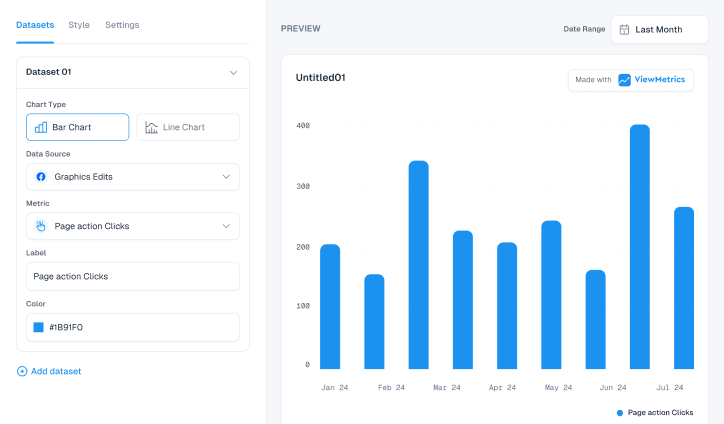
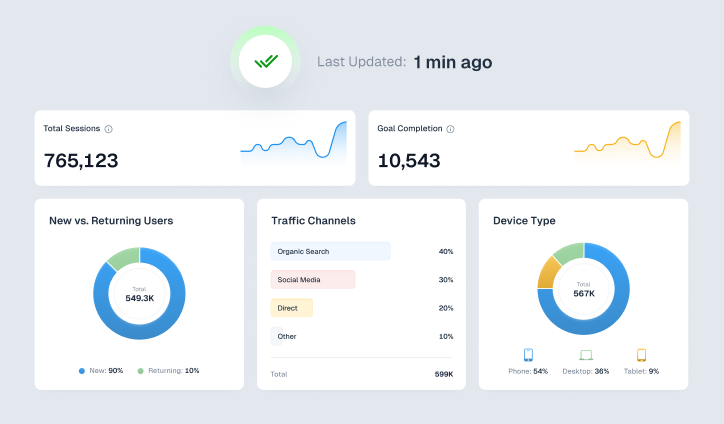
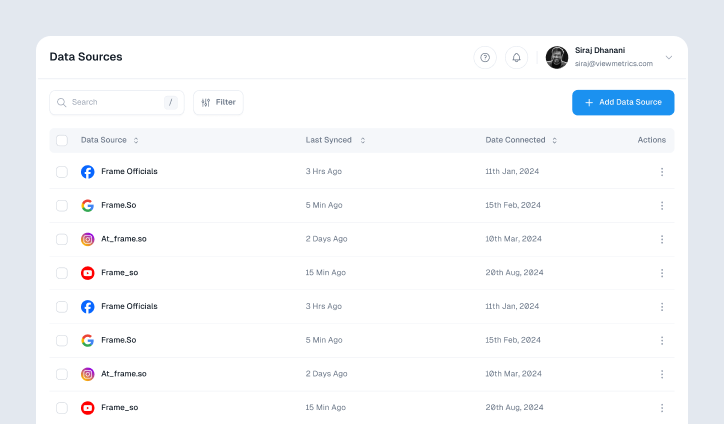
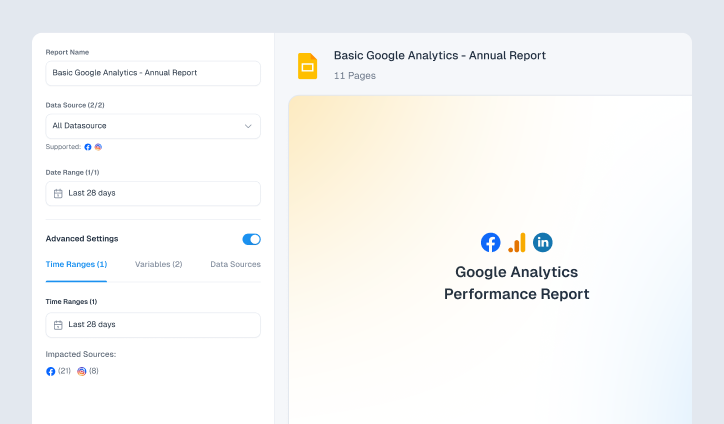
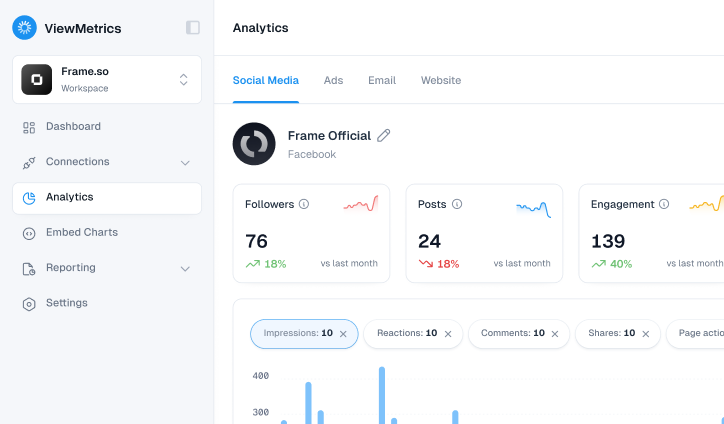
ViewMetrics gives you a combined view of all your marketing KPIs in one workspace. It integrates with your advertising, email, social, and analytics platforms so you can track performance without manual reporting. Perfect for agencies and marketing teams.
-
Google Analytics 4 (GA4)
GA4 measures traffic, conversions, and engagement. It helps you understand how users move through your website and which content drives meaningful actions.
-
Google Search Console
This tool by Google is great for tracking SEO KPIs like keyword rankings, impressions, clicks, and indexing issues.
-
HubSpot/Semrush/Ahrefs
If you want to track your SEO efforts for your content marketing campaigns, like leads, backlinks, domain authority, content health, and keyword growth, these tools are perfect for that!
-
Social Media Analytics Tools
Social media is a necessary part of your content marketing plan. To track the content performance across your social media platforms, you can use built-in analytics tools like Meta Insights, LinkedIn Analytics, TikTok Analytics, and X Analytics to help you measure engagement, reach, and content performance.
Conclusion
A strong content marketing KPI strategy helps you understand what drives impact, what needs improvement, and how to optimize your content for real business growth. With the right KPIs, tools, and reporting systems in place, you can create a clear path from content creation to measurable results.
Frequently Asked Questions (FAQs)
-
How often should I review content marketing KPIs?
Monthly reviews are ideal, but high-activity teams may review weekly for real-time optimization.
-
What are some common mistakes to avoid when tracking content marketing KPIs?
Tracking too many KPIs, ignoring context behind numbers, relying only on vanity metrics, and not reviewing KPIs regularly are some common mistakes to avoid.
-
What tools can I use to measure content marketing KPIs?
Tools like ViewMetrics, GA4, Search Console, HubSpot, Ahrefs, and Semrush help monitor performance across different channels.
-
What’s the difference between metrics and KPIs?
Metrics show general data. KPIs, on the other hand, measure how effectively content meets specific goals.
-
What are vanity metrics in content marketing?
Vanity metrics look impressive but do not show meaningful business impact. These include metrics like followers, likes, or impressions that do not lead to conversions.