You’ve teamed up with an influencer, the content’s live, and the likes are rolling in, but now what? If you’re nodding along, you’re not alone. Likes and comments are great, but they don’t tell the full story. To really know if your influencer campaign is doing what it’s supposed to, you need to go deeper. That’s where KPIs come in. In this guide, we’ll break down the most important KPIs you should track, how to measure them, and what they reveal about your campaign’s success. Let’s get started.
What are Influencer Marketing KPIs?
Influencer marketing KPIs are measurable metrics that show how well your influencer campaigns are performing. They help you track progress toward specific goals, whether that’s increasing brand awareness, generating leads, or driving sales. By regularly tracking and analysing these KPIs, you can see what’s working and what needs improvement, helping you make smarter decisions and improve your return on investment. To gain a full picture of campaign effectiveness, influencer KPIs are often evaluated alongside broader social media KPIs, ensuring that influencer efforts align with your overall channel goals.
Why KPIs Matter in Influencer Marketing
Here’s why tracking KPIs is important in influencer marketing:
-

Show the Value Behind Your Spend
Influencer marketing can get expensive, especially when working with big names. KPIs help you prove that your budget is actually bringing in results. Whether it’s sales, engagement, or traffic, these numbers back up your decisions and make sure every rupee or dollar is working for you.
-

Compare Performance Between Creators and Campaigns
Not all influencers bring the same kind of results. By tracking KPIs, you can clearly compare how different creators perform, or even which campaign formats work best. This helps you figure out what’s worth repeating and what needs to be dropped.
-

Fine-Tune Your Content and Timing
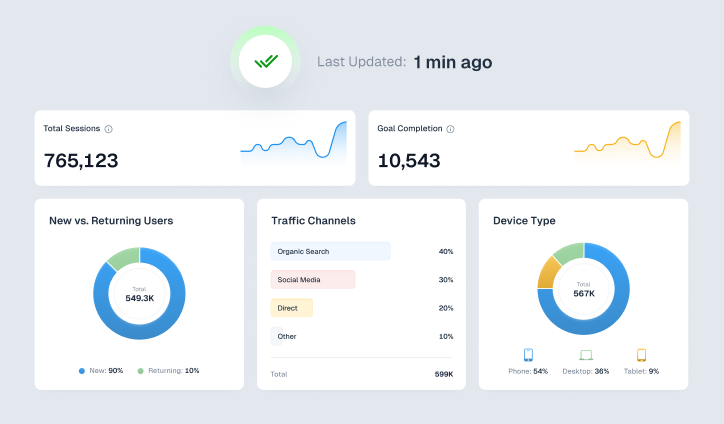
Sometimes it’s not the influencer, but the content, format, or timing that makes a difference. By keeping an eye on your metrics, you can adjust things like post frequency, video style, or messaging to see what clicks with the audience. A solid KPI dashboard makes it easy to track all of this in one place.
-

Build Better Partnerships
When you know which influencers deliver real results, you can nurture those relationships for the long run. This builds consistency and trust, both with your creators and your audience, leading to stronger outcomes over time.
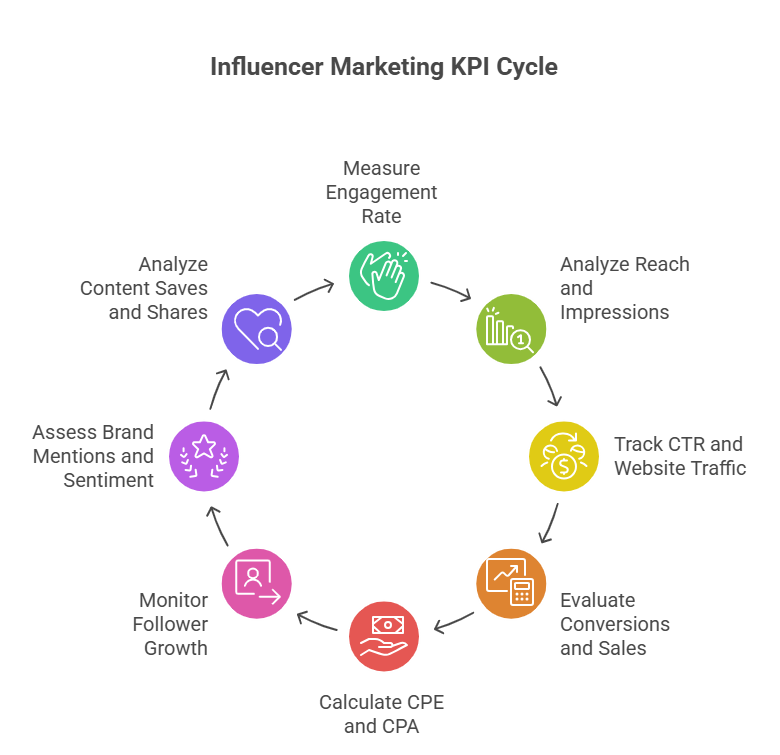
8 Key KPIs for Influencer Marketing Campaigns
-
Engagement Rate
Engagement rate shows how actively an influencer’s audience is responding to their content. It includes likes, comments, shares, and saves. A high engagement rate usually means the content feels relatable and trustworthy to followers. For brands, this is a good sign that the influencer’s audience actually cares about what they’re posting and is more likely to respond to the brand message too.
-
Reach and Impressions
Reach tells you how many unique people saw the content. Impressions show how many times it was viewed, even if some users saw it more than once. These numbers help brands understand how far the campaign went and how visible their message was. If reach and impressions are strong, it usually means the content was well-placed and got noticed.
-
Click-Through Rate (CTR) and Website Traffic
CTR tracks how many people clicked on a link compared to how many saw the post. It gives a clear idea of whether the influencer’s audience is actually taking action. Pair this with website traffic to see how many of those clicks led to real visits. Together, these KPIs help brands judge how well the campaign moved people from interest to action.
-
Conversions and Sales
At the end of the day, conversions and sales show if the campaign delivered real results. This could mean purchases, sign-ups, or downloads. To track it, brands often use special links or discount codes to connect actions back to a specific influencer. If conversions are high, it means the influencer didn’t just catch attention, but they actually convinced people to act.
-
Cost Per Engagement (CPE) and Cost Per Acquisition (CPA)
These metrics show whether the campaign was worth the money. CPE looks at how much each interaction cost. CPA looks at how much it cost to get a customer or achieve a goal. When these numbers are low, it means you’re getting good value from your influencer partnership. It’s a great way to measure efficiency and plan smarter budgets.
-
Follower Growth
Follower growth shows whether the brand is gaining new attention during the campaign. If more people are following the brand’s social accounts, that’s a sign the campaign is reaching the right audience. Consistent growth also tells you that the content left a lasting impact, not just a quick boost.
-
Brand Mentions and Sentiment
Brand mentions track how often people are talking about you online. Sentiment analysis adds another layer by checking if those conversations are positive, neutral, or negative. Together, these help you understand how your campaign is landing in the real world. If people are mentioning your brand in a good way, it’s a sign the influencer has helped shape a stronger brand image.
-
Content Saves and Shares
When someone saves or shares a post, it usually means the content hit home. Saves suggest people want to come back to it later. Shares mean they found it useful or interesting enough to show others. These actions go beyond likes. They show real value and help brands understand what kind of content sticks with the audience.
Best Practices for Measuring Influencer KPIs
-
Set Campaign Objectives First
Before you start tracking anything, be clear about what you want to achieve. Are you aiming for brand awareness, product sales, sign-ups, or engagement? Setting specific goals helps you know which KPIs actually matter for your campaign. Without this clarity, you’ll end up measuring numbers that don’t really reflect success.
-
Use Unique Tracking Mechanisms
To properly measure performance, you need a way to track which influencer is driving what. Use custom links, discount codes, or UTM parameters for each influencer. This helps you connect the dots between their content and your actual results, whether it’s clicks, conversions, or sign-ups.
-
Benchmark and Standardize
Don’t just look at numbers in isolation. Compare performance across campaigns and influencers. Set a baseline and stick to the same metrics every time. This way, you’ll know what “good” looks like and can spot underperformance quickly.
-
Prioritize Engagement and Conversions Over Follower Count
It’s easy to get caught up in big follower numbers, but what really matters is how people interact with the content. Focus more on likes, comments, shares, and clicks. These tell you if the audience is genuinely interested. Conversions give you an even clearer picture of impact.
-
Automate Reporting
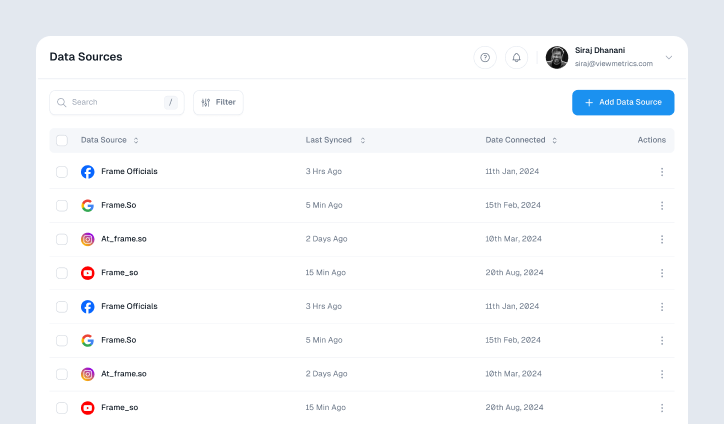
Manually tracking influencer performance can eat up a lot of time. Use tools that automatically pull in data from different platforms, organize it, and generate reports. This not only saves time but also reduces the chances of human error and helps you spot trends faster.
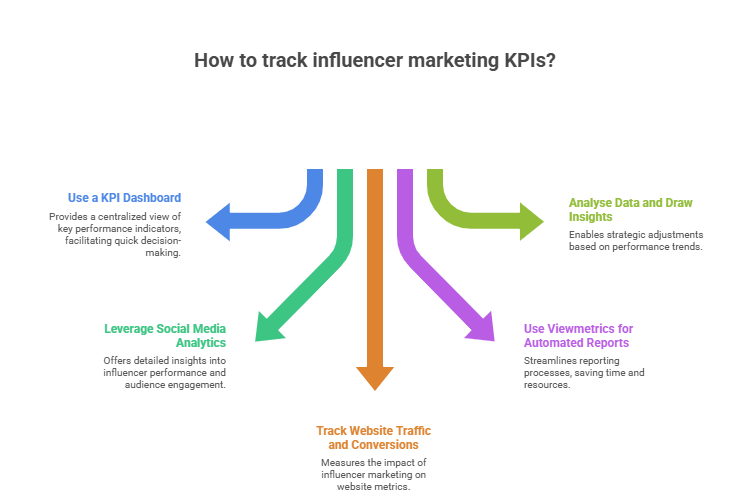
How to Track Influencer Marketing KPIs
-
Use a KPI Dashboard
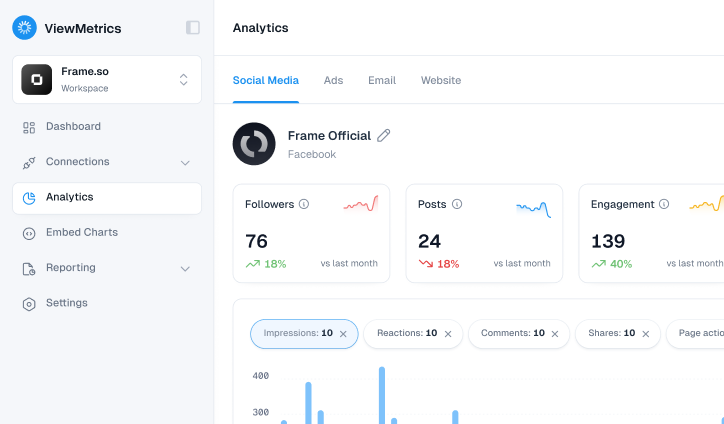
A good dashboard pulls all your important numbers into one place. Whether it’s impressions, engagement, or conversions, seeing everything side by side makes it easier to monitor progress and spot what’s working.
-
Leverage Social Media Analytics
Most social media platforms give you detailed performance data. Use it. Look at reach, engagement rate, audience demographics, and post performance. These numbers help you understand how the influencer’s audience is responding to your brand.
-
Track Website Traffic and Conversions
Use tools like Google Analytics to see how much traffic is coming from each influencer and what that traffic does on your site. Are visitors signing up? Making purchases? Staying on the page? These insights help you measure the real impact of your campaign.
-
Use Viewmetrics for Automated Reports
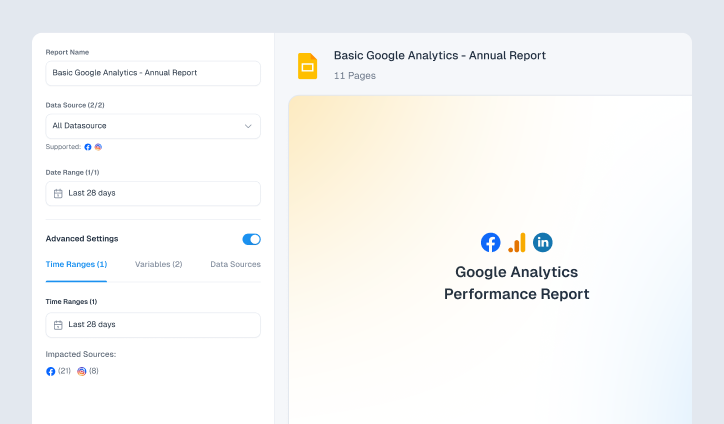
If you want a smoother reporting process, tools like Viewmetrics can help. It gathers data from various sources, organises it neatly, and gives you ready-to-use reports. This saves you time and keeps everything consistent.
-
Analyse Data and Draw Insights
Collecting data is just step one. The real value comes from understanding what the numbers mean. Look for patterns, compare performance, and figure out what’s driving results. Then, use those insights to improve your future campaigns.
Closing Thoughts
Influencer marketing can do a lot for your brand, but without tracking the right numbers, it’s easy to lose sight of what’s actually working. KPIs help you stay on track, make informed choices, and improve with each campaign. The more you learn from your data, the better your future results will be. Whether you’re aiming for sales, reach, or engagement, keeping an eye on the right metrics will guide your way forward. Keep testing, keep learning, and let the numbers show you what to do next.
Frequently Asked Questions (FAQs)
-
What are the most important KPIs for influencer marketing?
Some of the most useful KPIs to track include engagement rate, reach, website traffic, conversions, ROI, and brand sentiment. These give you a clear idea of how well your influencer campaign is performing.
-
How do I measure ROI in influencer marketing?
To figure out your ROI, compare what you spent on the campaign with what it brought in. That could be revenue, new leads, or sign-ups. The difference tells you whether the campaign paid off or not.
-
Which tools can help track influencer marketing KPIs?
You can use tools like ViewMetrics, Google Analytics, social media insights, or KPI dashboards. These help you keep an eye on performance in real time and take the guesswork out of tracking.
-
How often should influencer marketing KPIs be tracked?
It’s best to keep track of your KPIs while the campaign is running and take a closer look after it ends. This helps you make smarter decisions for the next one.
-
Are follower counts a reliable KPI for influencer campaigns?
Not really. A big follower count looks good but doesn’t tell you much on its own. It’s better to look at things like engagement, conversions, and how far the content actually reached. That gives you a clearer picture of what’s working.