Key Takeaways
- SEM KPIs help marketers measure ad performance beyond clicks and impressions.
- Tracking the right SEM metrics is critical as the costs of ads rise and automation becomes standard in 2026.
- Paid campaign success depends on balancing efficiency, quality, and conversion-focused metrics.
- Centralized tools like ViewMetrics simplify SEM reporting and decision-making.
As search engine marketing continues to evolve, success for paid ad campaigns in 2026 will depend less on volume and more on precision. Rising competition, higher ad costs, and AI-driven bidding models mean marketers can no longer rely on surface-level data. To stay profitable, you should track the right SEM KPIs that clearly show what is working, what is wasting budget, and how paid search contributes to real business growth.
What Does Search Engine Marketing Mean?
Search Engine Marketing (SEM) means paying to show ads on search engines when people search for something related to your business. It helps brands reach users who are already interested and ready to click, sign up, or buy.
Earlier, SEM relied heavily on keyword targeting, but modern SEM goes beyond that. It now includes audience signals, automated bidding, conversion modelling, and offline attribution. To measure and navigate through this complexity accurately, marketers need reliable SEM KPIs that reflect both efficiency and impact.
Why Do SEM KPIs Matter More Than Ever in 2026?
As paid search grows more competitive, tracking the right SEM KPIs becomes essential for sustainable performance.
- Higher Competition & Ad Costs: With more advertisers bidding on the same keywords, efficiency-focused KPIs help control spend.
- Smarter Budget Allocation: Clear performance data shows which campaigns deserve more investment and which need correction.
- Stronger Accountability: Teams must justify paid media spend with measurable outcomes, not assumptions.
- AI-Driven Optimization: With the rise of automation in SEM, automated bidding has increased. This automated bidding process relies heavily on accurate conversion and engagement signals to perform well and avoid overspending.
- Online & Offline Clarity: SEM KPIs help connect clicks to phone calls, store visits, and closed deals.
Top 10 SEM KPIs You Should Track in 2026
Below are the most critical SEM KPIs that marketers should monitor to optimize performance and maximize ROI.
-
Click-Through Rate (CTR)
CTR measures how often users click on your ad after seeing it. A strong CTR indicates that your ad copy, keywords, and targeting align with search intent.
Tracking CTR helps identify which ads resonate with users and which need refinement. This metric is available directly in Google Ads reporting.
-
Cost-Per-Click (CPC)
CPC shows how much you pay for each click on your ad. Rising CPCs often signal increased competition or declining Quality Score.
Monitoring CPC allows you to manage bids effectively and avoid overspending on low-value traffic. This KPI is tracked within Google Ads.
-
Conversion Rate
Conversion rate reflects the percentage of users who complete a desired action after clicking an ad. This metric reveals how well your ads and landing pages work
together.A healthy conversion rate ensures that paid traffic leads to meaningful outcomes. The data can be tracked using Google Ads and GA4.
-
Return on Ad Spend (ROAS)
ROAS is another important SEM KPI to track. It shows how much revenue your campaigns generate compared to the amount spent on advertising. This KPI is essential for
evaluating profitability.Tracking ROAS helps you prioritize campaigns that drive revenue rather than just drive traffic to your page. ROAS is available in Google Ads conversion reports.
-
Quality Score
Quality Score is Google’s assessment of your ad relevance, expected CTR, and landing page experience. A higher Quality Score often results in lower CPCs and
better ad placement.Monitoring Quality Score helps improve efficiency and overall campaign health. This metric is visible at the keyword level in Google Ads.
-
Bounce Rate
Bounce rate measures how many users leave your landing page without taking action. A high bounce rate may indicate a mismatched intent or poor page experience.
Tracking bounce rate helps identify landing page issues that hurt conversions. This metric is available through GA4.
-
Impression Share
Impression share shows how often your ads appear compared to the total number of eligible impressions. It reflects your visibility against competitors.
Low impression share may signal budget limits or weak ad rank. This key SEM metric can be tracked in Google Ads campaign reports.
-
Cost Per Conversion
Cost per conversion measures how much it costs to generate a single conversion. This KPI directly impacts profitability.
Tracking cost per conversion helps marketers optimize bids, budgets, and targeting. You can track this SEM metric in Google Ads.
-
Average Position
Average position indicates where your ads appear on the search results page. While no longer a primary optimization metric, it still provides context for
competitiveness.This KPI helps assess visibility trends and is available in Google Ads reporting.
-
Engagement Metrics
Engagement metrics include actions such as time on site, page depth, and interaction with video ads. These signals help measure user interest beyond clicks.
Tracking engagement metrics improves audience targeting and creative optimization. They can be monitored through GA4 and platform-level reports.
Why Use ViewMetrics to Track SEM KPIs Effectively
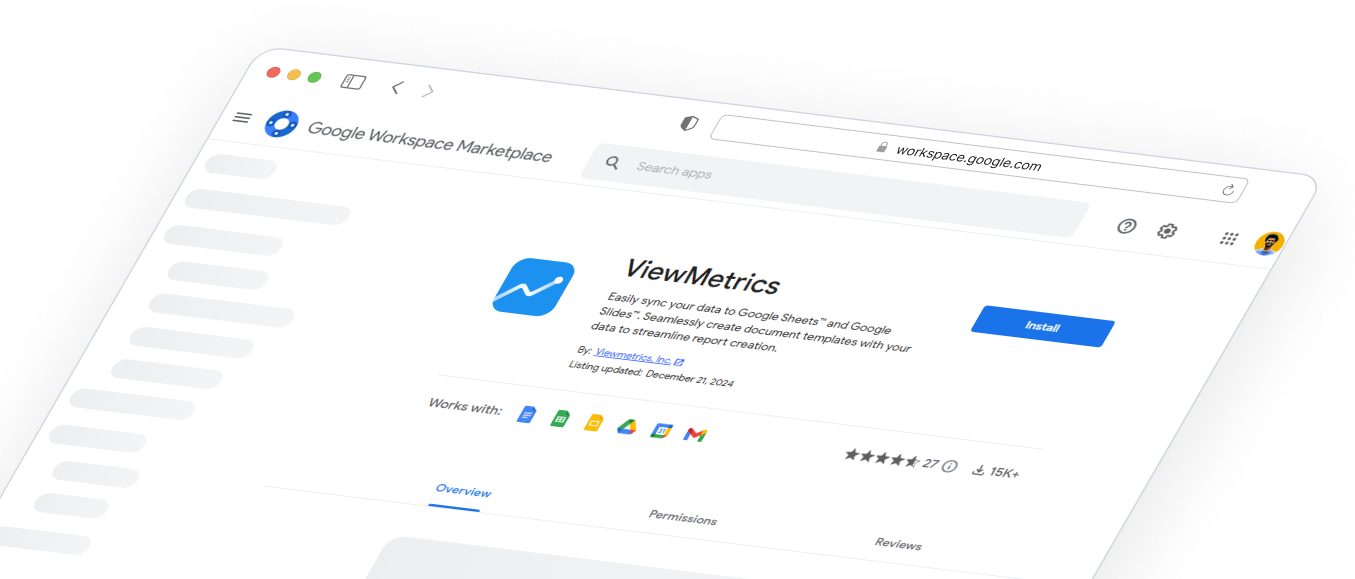
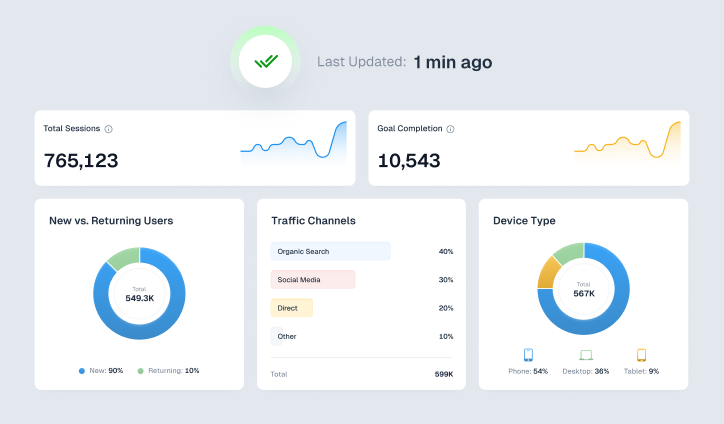
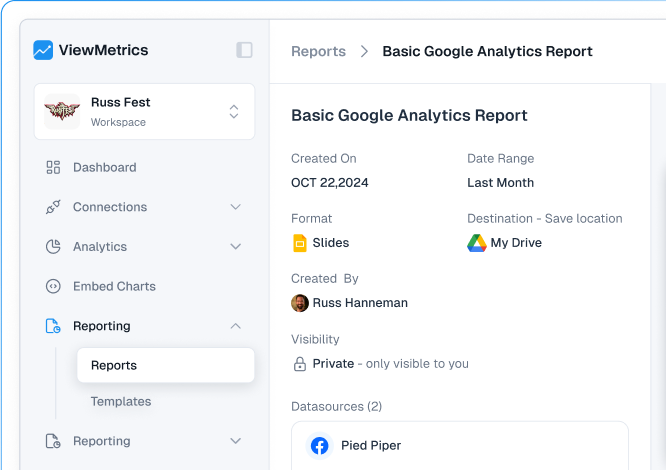
Tracking SEM KPIs across multiple platforms can become complex if not done in an efficient way. ViewMetrics can help you by simplifying this process. It can centralize performance data into one clear reporting view.
- All Google Ads KPIs are tracked in one dashboard
- Search, Display, and Video performance are visible side by side
- Reporting is automated, reducing manual effort
- Act faster with consistent, decision-ready insights
By focusing on performance-driven KPIs and using SEM reporting tools like ViewMetrics, you can optimize your paid marketing budgets, improve efficiency, and turn SEM data into measurable growth.


View All Your Marketing and Website Data - Instantly
 Connect Instagram, Mailchimp, Google Analytics & more
- Pre-built dashboards, no setup needed
- Save hours on reporting every week
FAQs
-
Which SEM KPIs matter most for Google Ads campaigns?
Important Google Ads KPIs include CPC (Cost Per Click), CTR (Click-Through Rate), conversion rate, ROAS, cost per acquisition, impression share, and Quality Score.
-
How are SEM KPIs different from PPC KPIs?
PPC KPIs focus on paid ad costs and clicks, while SEM KPIs also measure search intent, assisted conversions, and offline outcomes.
-
How can offline conversions be tracked in SEM?
Offline conversions can be tracked through store visits, phone calls, CRM-based attribution, and appointment bookings.
-
What tools are best for tracking SEM KPIs?
SEM KPIs can be tracked using Google Ads, analytics platforms, and a centralized reporting tool like ViewMetrics.