
Key Takeaways
- Marketing KPIs help teams track campaign performance, improve ROI, and make data-driven decisions.
- Different goals require you to track different KPIs, including digital marketing KPIs, brand metrics, and funnel KPIs.
- Grouping KPIs by category makes them easier to interpret and act on.
- Measuring trends over time is more valuable than reviewing isolated numbers.
- Tools like ViewMetrics simplify KPI tracking across online and offline channels.
Marketing performance can feel difficult to evaluate when data is scattered across tools and channels. Without the right metrics, teams often focus on activity instead of impact. This is why you need to understand all the important marketing KPIs and how to track them successfully.
In this guide, you will learn how marketing KPIs and metrics work, which KPIs matter most across digital and offline channels, and how to measure them effectively to improve performance and ROI.
What Are Marketing KPIs?
Marketing KPIs are measurable indicators that show how effectively your marketing efforts support business goals. They help teams understand performance across awareness, engagement, conversions, and revenue. Instead of tracking everything, KPIs focus attention on the metrics that drive decisions.
Related Read: What Are KPIs in Digital Marketing?
Importance of Marketing KPIs for Business Growth
Marketing KPIs matter because they turn marketing efforts into something measurable, explainable, and actionable. Instead of relying on assumptions, teams can use KPIs to understand what works, what does not, and where to focus next.
Here is why they are essential for growing businesses:
- Measure Results & ROI: Marketing KPIs show which campaigns, channels, or tactics are driving leads, sales, or revenue. This makes it easier to prove marketing’s contribution to business growth.
- Keep Teams Aligned: Tracking KPIs properly ensures that your marketing efforts are aligned with broader business objectives, such as growth, retention, or profitability, instead of working in silos.
- Make Better Decisions: KPIs replace guesswork with evidence, helping teams decide when to double down on successful strategies or stop underperforming ones.
- Discover Gaps in the Customer Journey: By tracking the right KPIs across awareness, engagement, and conversion stages, it’s easier for marketing teams to identify where their prospects are losing interest and focus on improving those touchpoints.
- Improve Budget Allocation: Metrics such as customer acquisition cost and conversion rate help marketers invest budgets more wisely and avoid unnecessary ad spend.
Despite being so important for business growth, only 23% of marketing professionals are confident that they are tracking the right KPIs. Keep reading to understand which core KPIs are most important for tracking the success of your marketing efforts.


View All Your Marketing and Website Data - Instantly
 Connect Instagram, Mailchimp, Google Analytics & more
- Pre-built dashboards, no setup needed
- Save hours on reporting every week
17 Core Marketing KPIs You Need to Track
To make your metrics actionable, it helps to group them by function. Below are the most important KPI categories that cover both digital and offline marketing.
Digital Marketing KPIs for Better Performance
- Traffic & Engagement KPIsTraffic and engagement KPIs measure how users interact with your digital channels. These metrics include sessions, page views, time on page, and bounce rate. They help determine whether campaigns are attracting and retaining the right audience.
- Conversion & Revenue KPIsConversion-focused KPIs track how effectively marketing activities generate leads, sales, or other desired actions. Metrics such as conversion rate, cost per acquisition, and return on ad spend help connect marketing activity to revenue.
- Social Media KPIsSocial media KPIs measure reach, engagement, and audience growth across social media platforms. These metrics provide insight into social media performance and content effectiveness.
- Performance Marketing KPIsPerformance marketing KPIs evaluate how paid ads perform across clicks, conversions, and costs. Metrics such as CPC, CTR, and ROAS show how ads perform across clicks and revenue outcomes.
- SEO & Organic Growth KPIsSEO KPIs measure organic visibility and long-term traffic growth. These include keyword rankings, organic sessions, and backlinks. Tracking the right SEO KPIs helps sustain consistent inbound growth.
- Email Marketing KPIsEmail marketing metrics evaluate click-through rates, open rates, and conversions from campaigns. They help you analyze list engagement and email effectiveness.
- Brand Marketing KPIsThese track awareness, sentiment, and recall. Metrics such as brand search volume, share of voice, and brand mentions help evaluate long-term brand impact beyond immediate conversions.
- Marketing Funnel KPIsMarketing funnel KPIs measure how prospects move from awareness to conversion. These metrics include lead-to-customer rate, drop-off rates, and conversion velocity, helping teams identify friction points in the funnel.
- Marketing Automation KPIsThese KPIs track how automated workflows contribute to efficiency and conversions. Metrics such as lead scoring accuracy, email automation performance, and campaign attribution reveal how automation supports scalability.
Offline Marketing KPIs That Still Matter
Offline marketing KPIs help businesses understand whether non-digital campaigns are driving real-world impact. These metrics connect physical exposure, such as events or print campaigns, to measurable business outcomes.
Key offline marketing KPIs include:
- Footfall or Store VisitsThis marketing KPI tracks how many people visit a physical location during a campaign period, helping measure awareness and interest generated by offline efforts.
- Inquiry or Call VolumeThis metric measures the number of calls, walk-in inquiries, or form submissions triggered by offline campaigns, indicating lead-generation effectiveness.
- Coupon or Promo Code RedemptionsWhen you track the unique code redemptions, you can better understand how your offline promotions are directly converting into purchases.
- Campaign Conversion RateThis KPI shows the percentage of your offline marketing campaign exposures that result in a desired action, such as a purchase or sign-up.
- Sales Uplift During Campaign PeriodsThis important marketing metric measures changes in sales volume during or immediately after an offline campaign, helping assess its revenue impact.
- Web Traffic Influenced by Offline ChannelsIncreases in direct traffic or branded searches can indicate interest generated by offline marketing activities.
- Customer Acquisition Cost (CAC)This KPI calculates the total cost of acquiring a customer through offline campaigns, helping you evaluate efficiency and scalability.
- Return on Investment (ROI)ROI compares campaign costs to the revenue generated, providing a clear view of financial effectiveness.
How to Measure Marketing KPIs Effectively?
Measuring marketing KPIs works best when you follow a structured, repeatable approach. The steps below help ensure your KPIs stay meaningful, actionable, and aligned with business goals.
- Start by defining clear business objectives: Every KPI should connect directly to what you want to achieve, such as increasing revenue, generating qualified leads, or improving retention.
- Select KPIs that directly reflect those objectives: Choose metrics that clearly indicate success, rather than tracking numbers that look impressive but do not influence outcomes.
- Use consistent formulas across teams: Standardizing how KPIs are calculated avoids confusion and ensures accurate comparisons over time.
- Collect data from all relevant marketing channels: Pull data from analytics tools, CRM systems, ad platforms, and email tools to get a complete performance view.
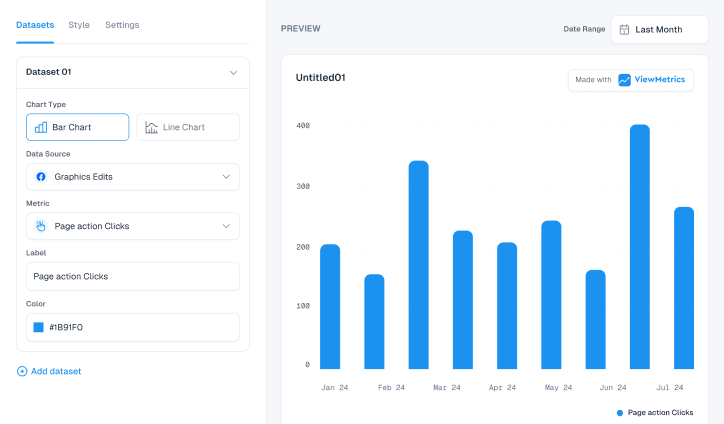
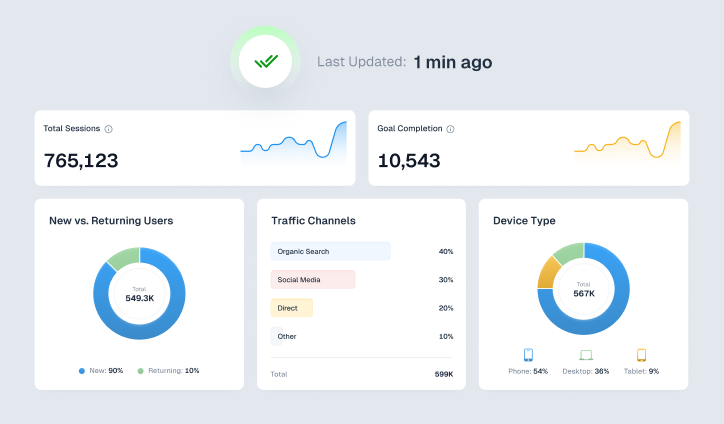
- Centralize KPI data in one reporting system: Dashboards make it easier to track trends, spot issues, and share insights without manual effort.
- Track performance trends instead of isolated numbers: Looking at changes over time provides better context than reviewing a single data point.
- Combine quantitative data with qualitative insights: Metrics become more meaningful when paired with customer feedback, campaign context, or behavioral patterns.
- Review & refine KPIs as goals evolve: As strategies change, KPIs should be updated to stay relevant and actionable.
How ViewMetrics Helps You Track the Right Marketing KPIs
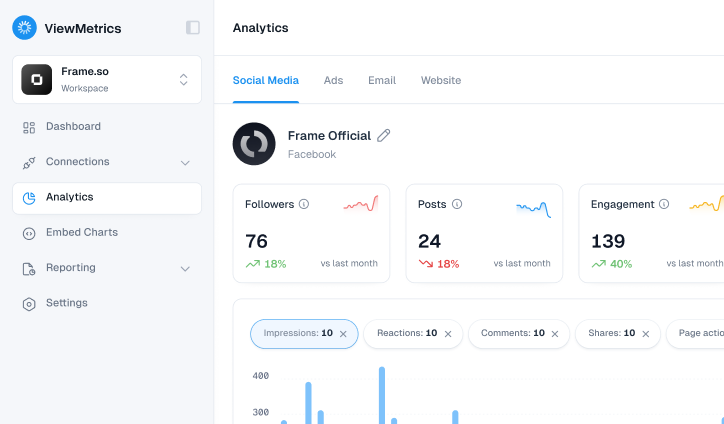
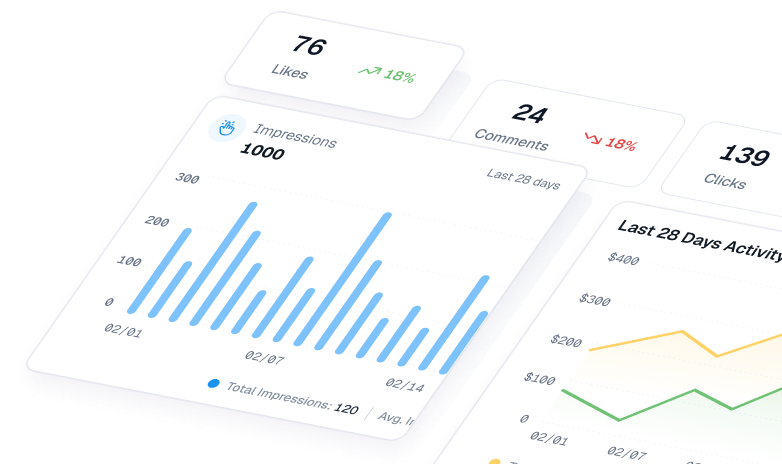
ViewMetrics simplifies marketing KPI tracking by bringing all your performance data into one clear, centralized view.
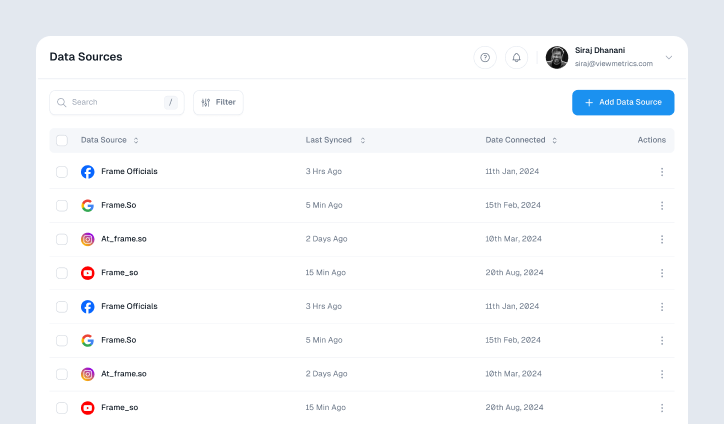
- All KPIs in one place: Connect ads, analytics, email, and other channels into a single dashboard.
- Less manual work: Automated data sync and reporting reduce errors and save time.
- Focus on what matters: Track growth-driven KPIs instead of vanity metrics.
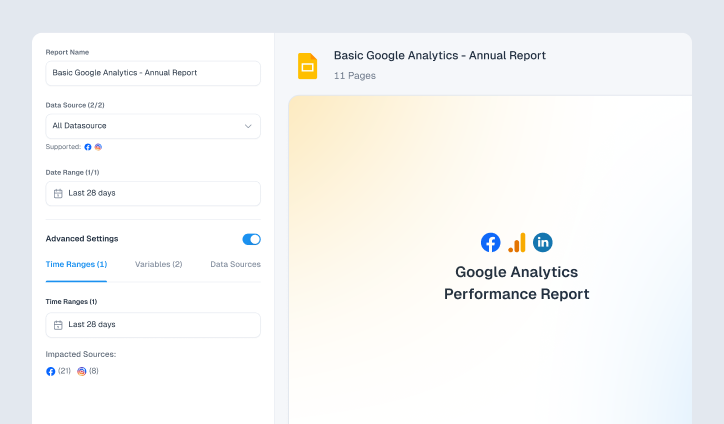
- Easy to share: Dashboards keep teams and stakeholders aligned on performance.
View All Your Marketing and Website Data - Instantly
- Connect Instagram, Mailchimp, Google Analytics & more
- Pre-built dashboards, no setup needed
- Save hours on reporting every week
FAQs
-
What are the most important digital marketing KPIs to track?
Key digital marketing KPIs include conversion rate, cost per acquisition, ROAS, organic traffic growth, and lead-to-customer conversion rate.
-
How do online and offline marketing KPIs differ?
Online KPIs track digital actions such as clicks and conversions, while offline KPIs measure footfall, inquiries, and in-store impact.
-
How often should marketing KPIs be reviewed?
Marketing KPIs should typically be reviewed weekly or monthly, depending on campaign intensity and goals.
-
Which tools can be used to track marketing KPIs?
Tools such as analytics platforms, CRM systems, and KPI dashboards like ViewMetrics help centralize and track marketing KPIs effectively.